
Intelligent Automation Program for an Italian Multi-Utility
- Client
- Listed multi-utility · Italy · five provinces, energy, water, waste and public services
- Industry
- Energy & Utilities
- Department
- Information Technology
- Region
- Italy · Europe
The security alert that matters is the one nobody had time to read. A listed Italian multi-utility was checking network alerts, telecom invoices and fuel-card statements by hand, each a place where a threat, an overcharge or a misused card could slip through. From 2020 to 2025 we built and ran a programme of 20+ UiPath robots, owned by a Centre of Excellence inside the company and reviewed quarterly with leadership.
A working model of the approach on sample data. It plays on its own and pauses when scrolled away; nothing here touches a live system.
The results
- 20+
- automations in production
- Across IT security, finance and HR, on the full UiPath Automation Cloud. Count from the delivery team.
- 5 yrs
- running, 2020 to 2025
- Monitored, with quarterly reviews with leadership.
- 1
- in-house Centre of Excellence
- Built inside the company to own the pipeline, standards and monitoring.
The challenge
Our client is a listed multi-utility serving five provinces in northern Italy: electricity and gas, generation and district heating, waste, water, e-mobility and public lighting. Formed from several local utilities, the group ran the back office of all of them at once, with work spread across many legal entities, suppliers and systems. Much of it was repetitive, rule-based and done by hand.
What it was costing them
- Security alerts nobody had time to read. The Darktrace platform produced hourly alert reports. Checking every source and destination IP against threat intelligence by hand is slow, and the alert that matters is the one nobody got to.
- Five telecom portals, every month. Invoices and technical documentation had to be fetched from five telecom operators, across several company accounts, and filed internally.
- Fuel-card leakage. Refuelling transactions on corporate cards were checked by hand for wrong mileage, implausible consumption and price anomalies, which is where misuse and errors hide.
- Cost allocation by hand. Fuel statements from two suppliers had to be split by vehicle plate across seven group companies.
- No owner for automation. Without a Centre of Excellence, each robot would be a one-off, with nobody deciding what to automate next or checking that it still runs.
- Back office, done by hand → Darktrace alerts: threats
- Back office, done by hand → Telecom invoices: overcharges
- Back office, done by hand → Fuel cards: misuse
- Back office, done by hand → Fuel costs: allocation
The approach
From 2020 to 2025 we built and ran a managed automation programme of 20+ UiPath robots on the full UiPath Automation Cloud, owned by a Centre of Excellence inside the company, with monitoring, reporting and quarterly leadership reviews. Four of its flows show the range.
1. Security alert analysis
- Every alert read automatically. The robot collects the Darktrace alert reports from the mailbox they arrive in, unpacks the attachments and parses each alert: model, severity, source and destination IP, port and link.
- One queue item per alert. Alerts go onto an Orchestrator queue, so each is checked, retried and logged on its own.
- Threat intelligence on every IP. External addresses are checked against VirusTotal and IBM X-Force Exchange for recorded threats and country of origin, with a whitelist for known-safe addresses and a fallback geolocation service.
- Clear escalation rules. An alert is escalated if the source or destination is outside the EU, if either has recorded threats, or if it matches a watched Darktrace model such as denial of service, cryptomining, BitTorrent, Pastebin, Tor downloads or FTP.
- Reports for the administrators. Escalations reach IT security as formatted HTML emails; every alert is logged in daily processing and alert reports, with a separate exception log.
- Alerts in the mailbox
- Orchestrator queue
- Threat-intel checks
- Escalation rules
- Reports to admins
2. Telecom invoice collection
- Five operators, one robot. The robot logs into six portals of five telecom operators with credentials held in Orchestrator, for each company account and line type, and downloads invoices and technical documentation as PDF and CSV.
- Nothing downloaded twice. It checks what is already filed, handles zipped downloads and renames files to one convention.
- Filed where finance works. Documents went to the finance document repository and, later in the programme, into ServiceNow.
- Runs on the billing cycle. Monthly, or every other month per portal, with a run report and Italian-language notification emails to the process owner, including any business exceptions.
3. Fuel-card checks
- Transactions downloaded. The robot downloads every refuelling transaction on the corporate fuel cards from the supplier's customer portal.
- Four automatic checks. Fuel lines only, sorted by plate and date, then checked for wrong mileage, mileage delta between fill-ups, average consumption and price.
- Anomalies to HR. A full checked report and a separate anomalies report are saved and emailed to the owners.
4. Fuel cost allocation
- Statements read automatically. The robot reads the PDF fuel statements from two suppliers and extracts each vehicle plate and amount.
- Costs mapped to the right company. Each transaction is matched to the existing cost data and written onto the template of the group company that owns the vehicle, across seven companies.
Across the programme
- A Centre of Excellence inside the company. We set it up to run the programme: pipeline, standards, ownership and the link to leadership.
- The full UiPath Automation Cloud. Orchestrator queues, assets and credentials; Action Center for human-in-the-loop steps; Document Understanding with AI for document-based processes.
- Built to one standard. Robotic Enterprise Framework, configuration files, business versus system exceptions, exception logs and screenshots, test harnesses.
- Monitoring and governance. A monitoring system with reporting, and quarterly check-ins with leadership to review the programme and decide what to improve next.
Technology
| Layer | What we used |
|---|---|
| Platform | UiPath Automation Cloud: Orchestrator queues, assets and credentials, Action Center, Document Understanding with AI |
| Development | UiPath Studio, Robotic Enterprise Framework; mail, Excel, PDF, web API and UI automation activities |
| Security and threat intelligence | Darktrace, VirusTotal API, IBM X-Force Exchange, geolocation lookup |
| Business systems | ServiceNow, operator and supplier web portals, finance document repository |
| Reporting | HTML email reports, run reports, exception logs |
The outcome
For five years the programme ran as a production system, not a collection of one-off robots: 20+ automations, one standard, one owner inside the company.
| Before | After | |
|---|---|---|
| Darktrace alerts | Checked by hand, when someone had time | Every alert checked against two threat-intelligence sources, escalated by rule |
| Telecom invoices | Fetched from five operators' portals every month | Collected and filed automatically on the billing cycle |
| Fuel-card transactions | Checked line by line | Every transaction checked four ways, anomalies reported to HR |
| Fuel cost allocation | Split by hand across group companies | Mapped automatically across seven companies |
| Ownership of automation | Nobody | A Centre of Excellence with monitoring and quarterly leadership reviews |
- 20+ automations in production across IT security, finance and HR, from 2020 to 2025.
- A Centre of Excellence inside the company owning the programme.
- Every Darktrace alert checked against two threat-intelligence sources, with escalations and reports for the system administrators.
- Monthly invoice collection from five telecom operators taken off staff entirely.
- Every fuel-card transaction checked four ways, with anomalies reported, and fuel costs allocated across seven group companies.
- A programme worth several hundred thousand euros over its life, monitored and reviewed quarterly with leadership, until the client moved its automation to Microsoft Power Automate in 2025.
- Scope, not savings. Time, cost and ROI were not measured; the figures on this page describe the programme.
The risk most teams miss
Twenty robots are not twenty projects; they are a production system. Portals change their screens without notice (the telecom robot's history is a long list of screen and pop-up fixes), threat-intelligence APIs rate-limit, mailboxes fill up. Without monitoring and an owner, a robot fails silently and the business finds out when an invoice is missing or an alert went unread. Here the programme ran through a Centre of Excellence, on central monitoring, per-item queues and exception reporting, with quarterly reviews where leadership saw what was running and what needed fixing.
Built with
The tools this ran on, by the layer each one carried.
- Apps & integration
- Automation
 UiPath StudioUiPath's design environment for building RPA workflows.
 UiPath Document UnderstandingUiPath's document classification, splitting and extraction, with human validation.
- UiPath OrchestratorCentral control for UiPath robots: queues, schedules, assets and credentials.
- UiPath Action CenterHuman-in-the-loop tasks for UiPath robots.
 UiPath Automation CloudUiPath's hosted platform for orchestration, document AI and human review.
- UiPath REFrameworkUiPath's Robotic Enterprise Framework for transactional, retry-safe robots.
- Data & cloud



Related work
 Energy & Utilities~120group companies covered every monthEnergyLink Invoice Reconciliation Automation for a US Oil ProducerOil and gas producer · United States · NYSE-listed, about 120 group companiesRead the case
 Construction & Infrastructure< 1 dayProjectedmanagement reporting, down from 30ERM Platform for Road ConstructionRoad-construction group · Bulgaria · ~300 staff, €100M+ revenue, own asphalt, concrete and fuel sitesRead the case
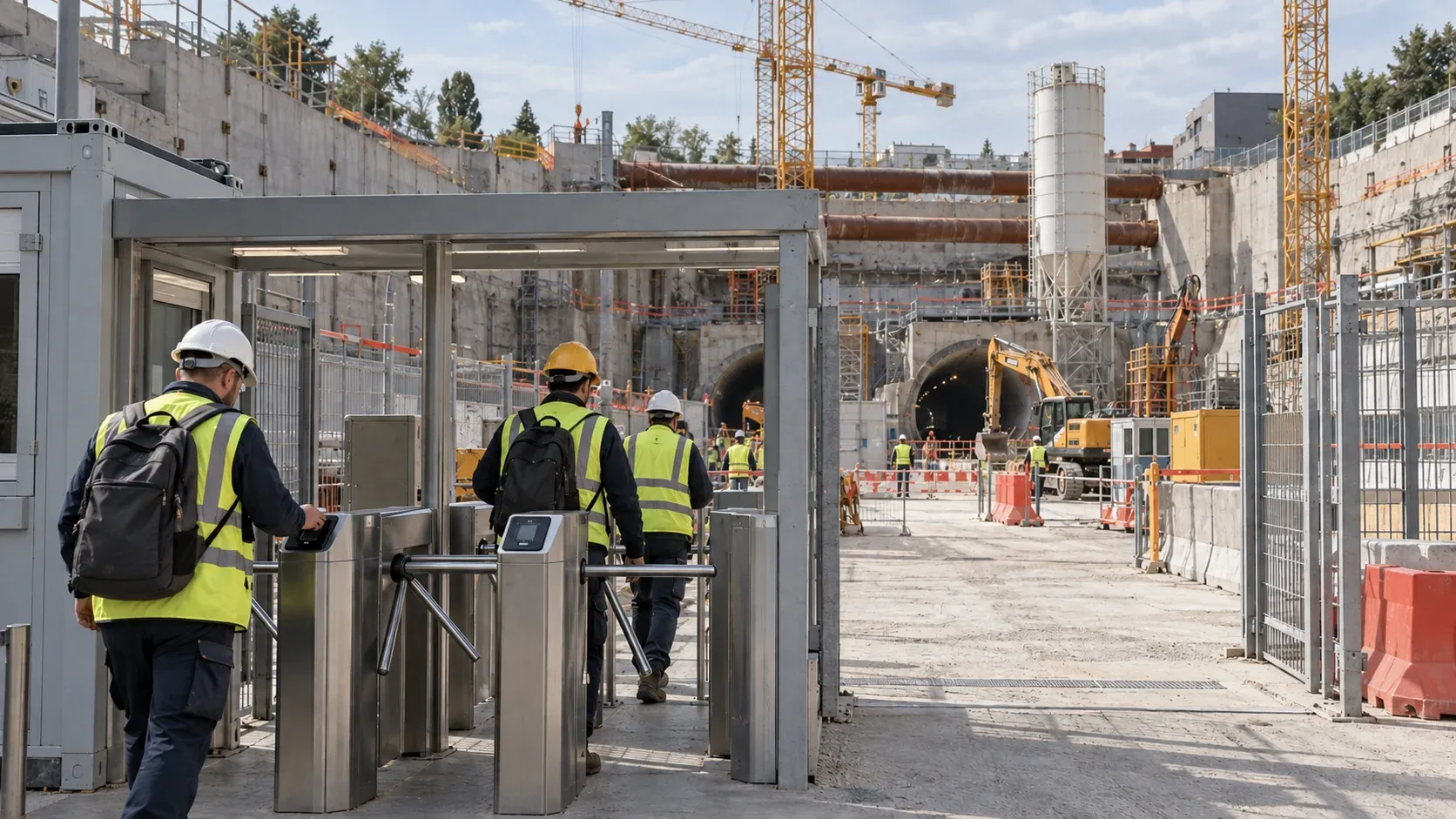 Construction & Infrastructure14%of reviewed staff flagged for clocking fraudTimesheet Fraud Detection for a Metro Construction ConsortiumConstruction consortium · Europe · metro line build, 1,200+ people through its site gatesRead the case
Next step
Start the same conversation
Tell us the process that keeps breaking. We will come back with what it would take to fix it, what it would cost, and what we would measure.
Or write to us directly: •••••@•••••••.•••
- A reply from a partner within one business day
- Fixed scope and fixed fee, agreed before we start
- The maps and the backlog are yours either way